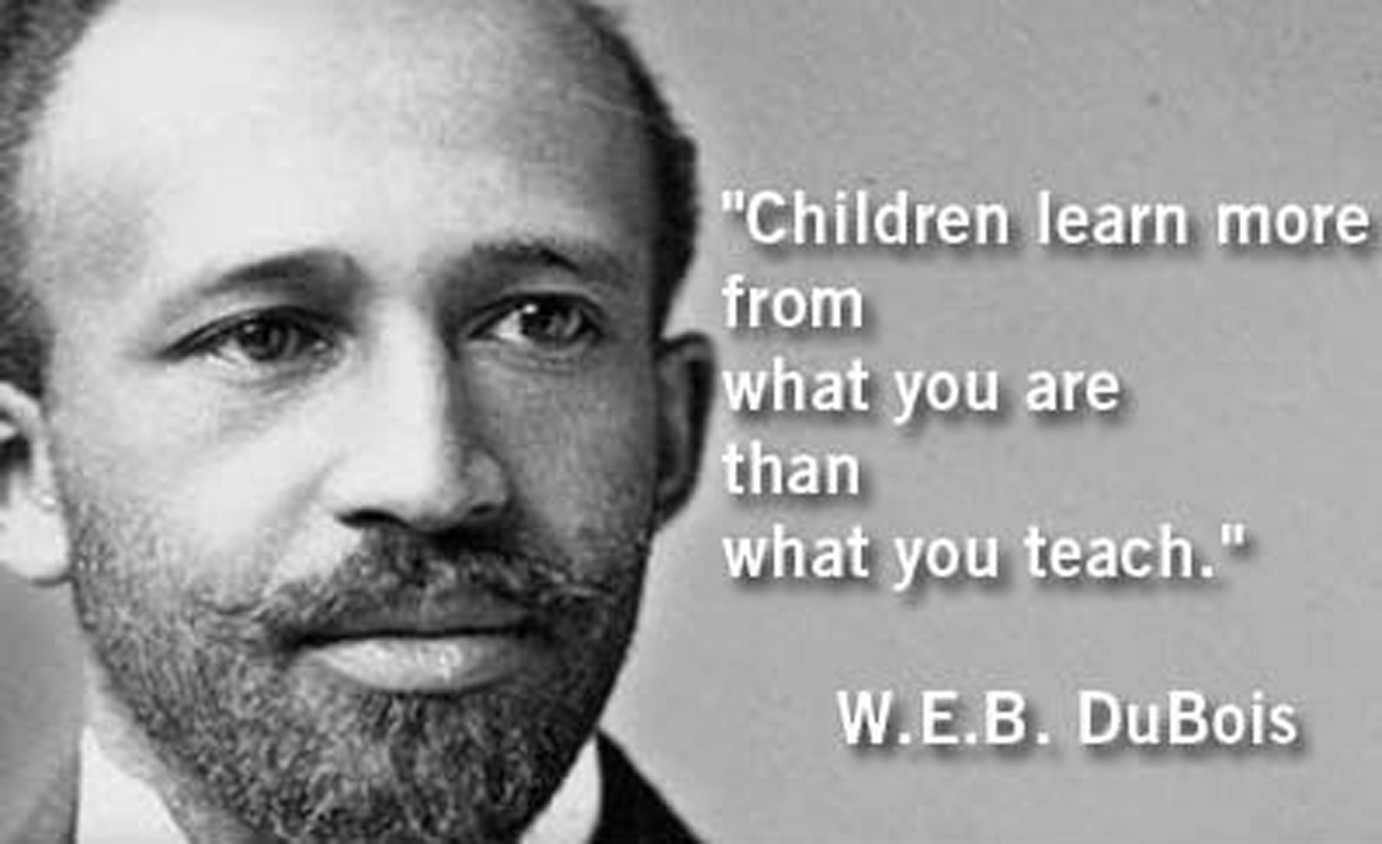
W.E.B Du Bois was a very talented American man. He was a sociologist, socialist, historian, civil rights activist, author, writer, and editor. Bois was born in Great Barrington, Massachusetts and got his education and knowledge from a variety of places like Harvard University, Humboldt University of Berlin, and Fisk University. He was one of the most important black protest leader in the United States during the first half of the 20th century. Bois believed that that social science would solve the race problem that was going on during this time. He came up with a conclusion that this race problem would get accomplished through agitation and protest.
During this time period for him to accomplish this goal Bois came to forces with the most influential black leader which was Booker T. Washington. Washington came up with the strategy and preached to black people to accept discrimination at the time and also elevate themselves through hard work and economic gain. By doing this strategy black people would win and gain the respect of whites. Bois really didn’t like the idea that Washington came up with so the two ended up parting ways with each other. Two years later Bois took lead in founding the Niagara Movement and it was dedicated to attacking the platform of Booker T. Washington. Even though the small organization was weakened by Washington’s opposition it was still a significant part and inspiration for the interracial NAACP that was founded in 1909.
Bois played a big role in the creation of the NAACP and also became the association’s director of research and editor of it’s magazine, “The Crisis”. By him being in this type of role he influenced the middle-class blacks and progressive whites as the propagandist for the black protest from 1910 until 1934. In both the Niagara Movement and NAACP bois acted mostly as a integrationist. Bois was a leader that wouldn’t settle for less because for years to come after the Niagara Movement and NAACP he was still finding to help and encourage blacks. In 1934 he resigned as the editor of “The Crisis” and the NAACP and was remembered as a race leader. He had also been an advocate of black capitalism and black support of black business. In today’s society it is so many people who could relate to what Bois stood for and what he wanted to do to be remembered because in today’s society it’s so many black leaders who are fighting for black communities and also supporting one another.
 Antonio's BLOG